





Waterfall Pumps
Waterfalls are not only a beautiful way to help circulate the water; they help oxygenate the water as well. Waterfalls look and sound beautiful too! The heart of a waterfall is the waterfall pump. It’s essential for moving substantial amounts of water through a length of tubing and up to the spillway to create your desired flow display.
About Our Waterfall Pump Selection
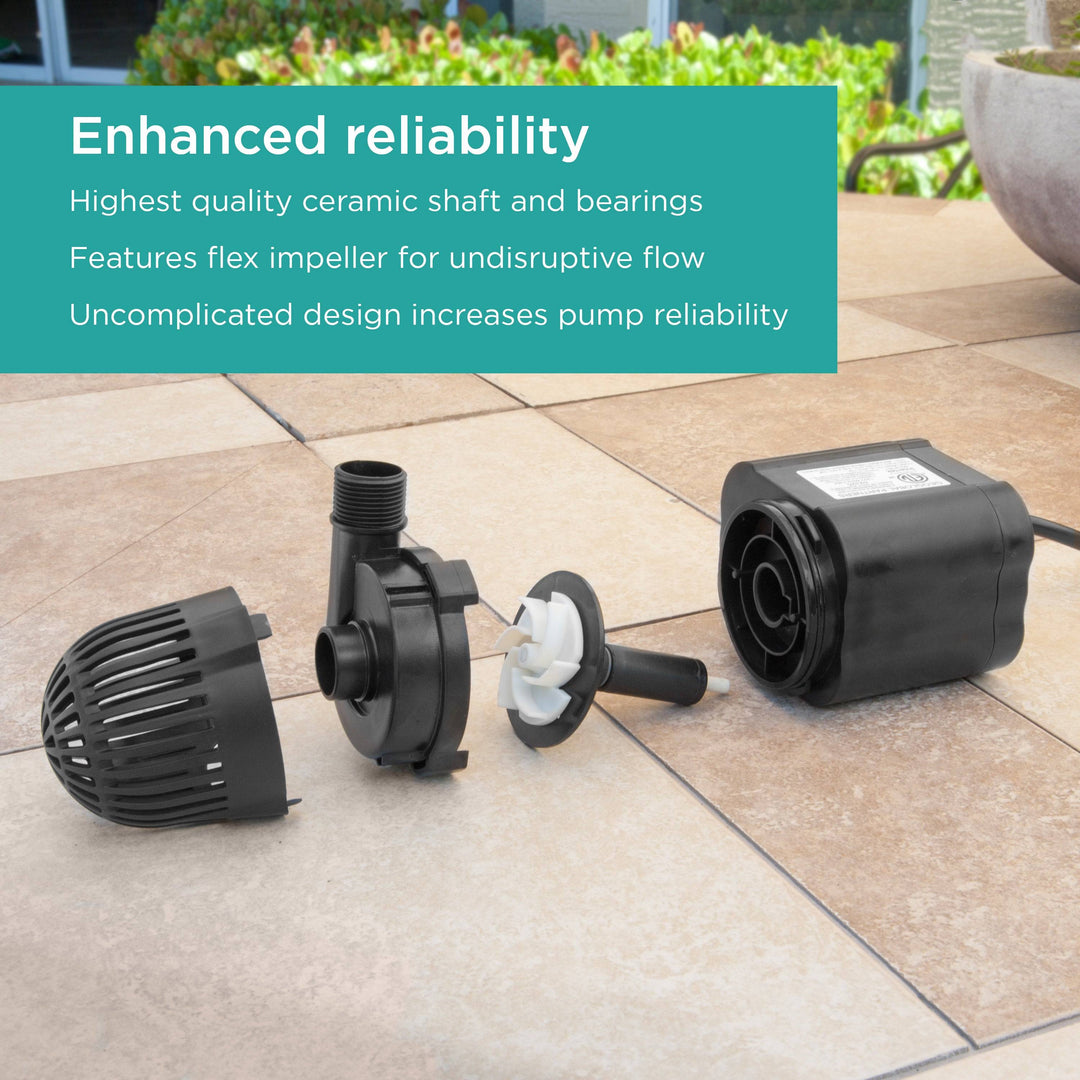
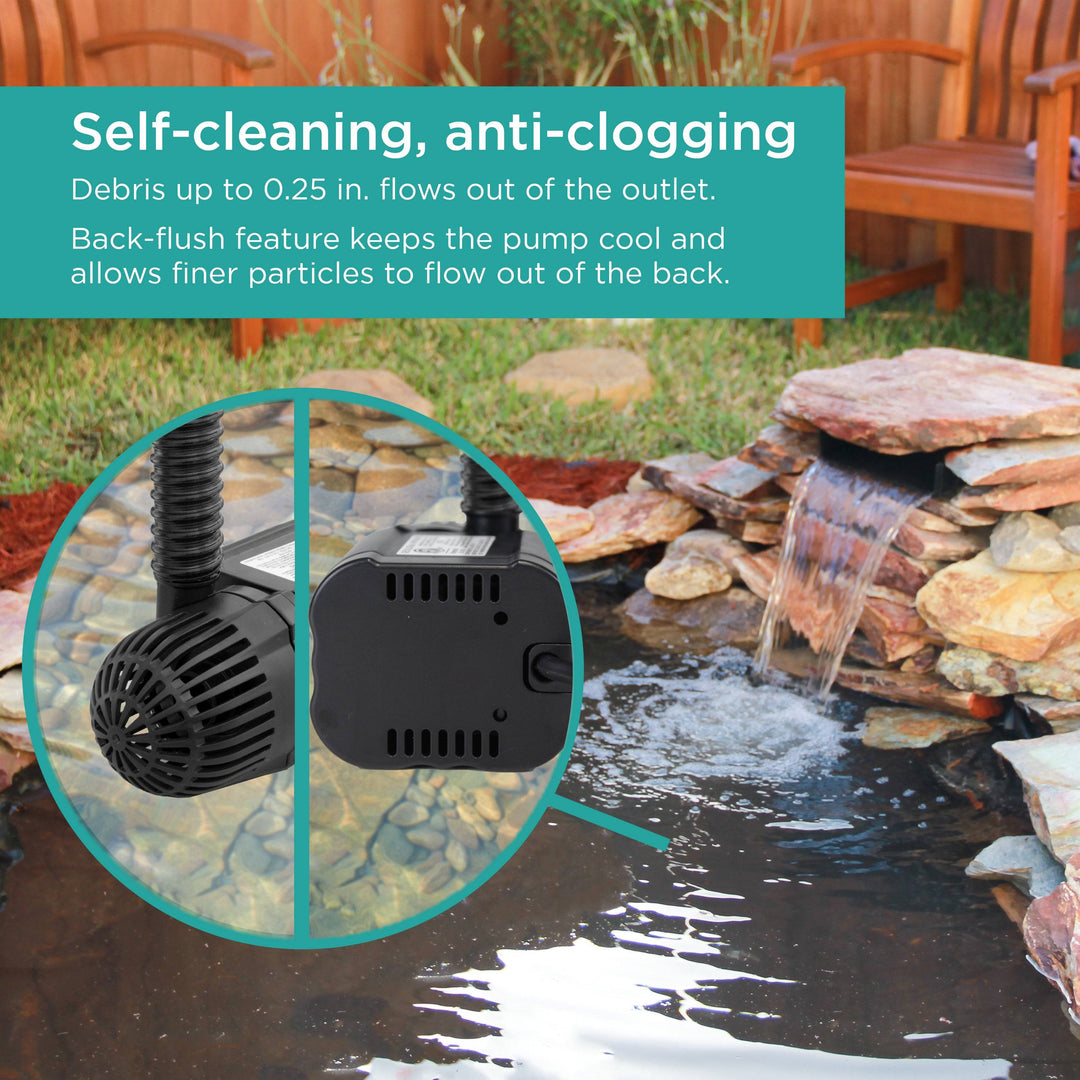
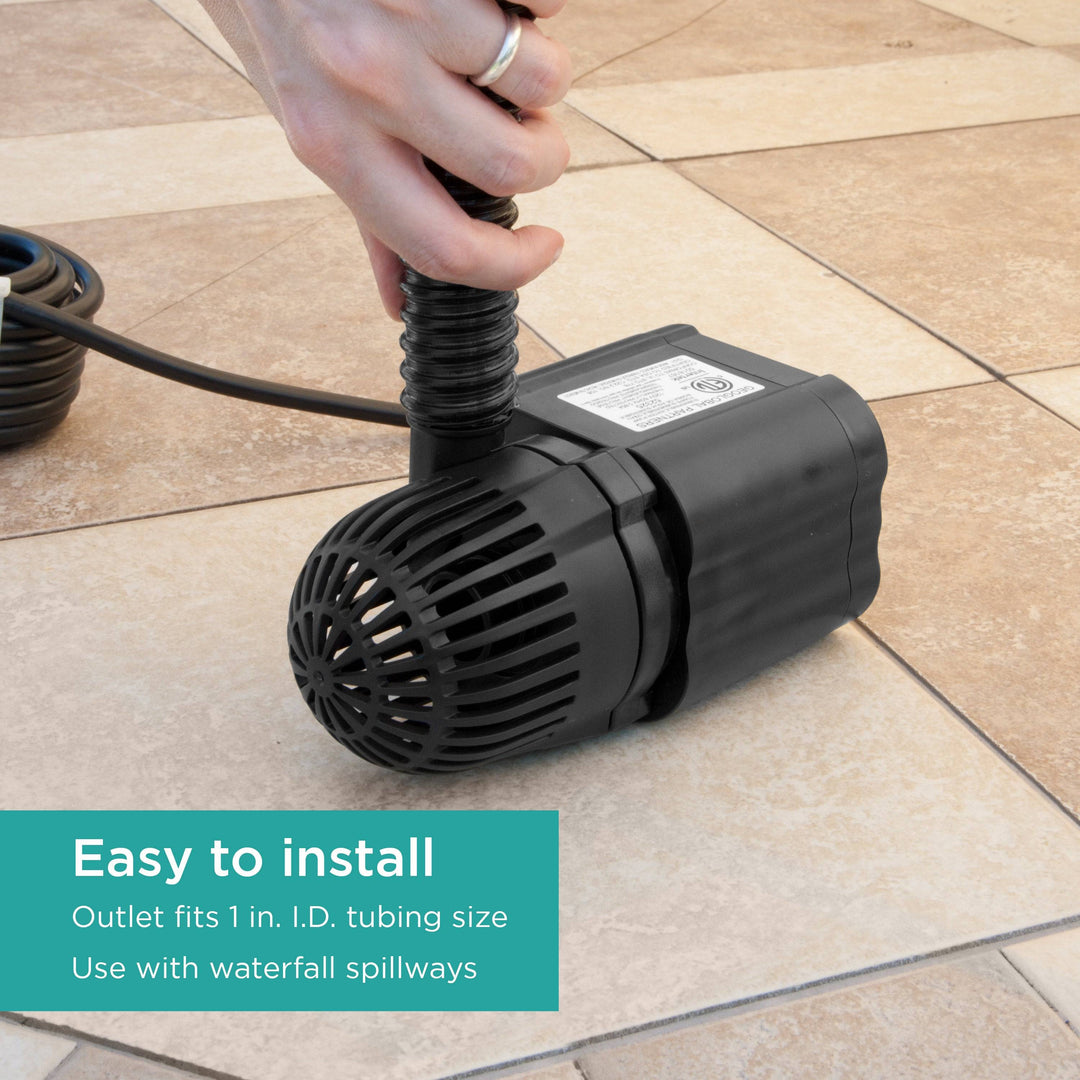
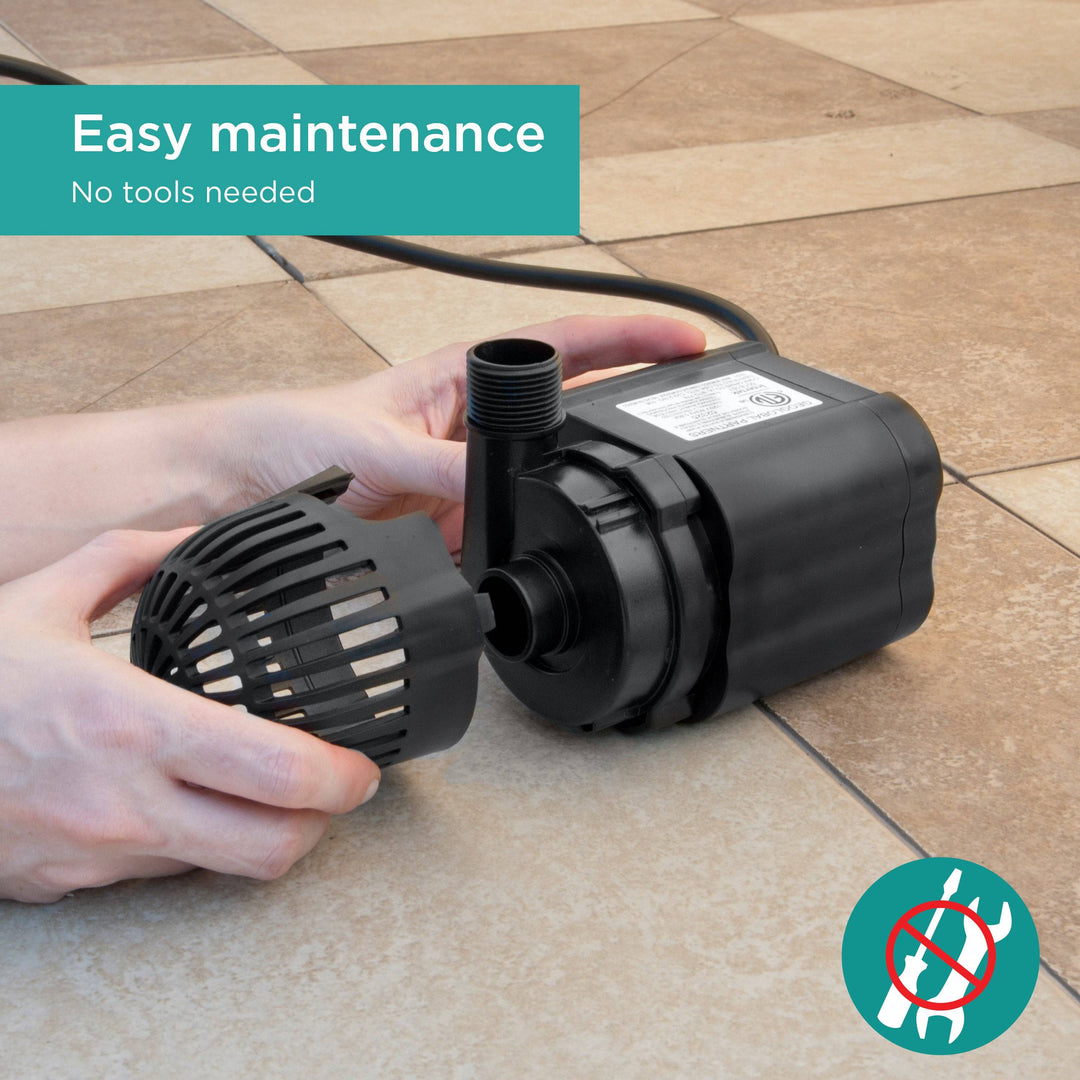
Selecting a TotalPond Waterfall Pump
Figuring out the correct pump size you need is worth the time and effort. If the pump is too small, there may be no waterfall because the pump wasn’t strong enough. If the pump is too large, there may be too much pressure for the size of the waterfall and water will gush over the sides instead of out of the spillway, creating a mess.
Determining the flow and lift needed is a two-phase formula.
To determine the flow, use this rule of thumb:
For every 1 in. of spillway width, you need 100 GPH (gallons per hour) flow to achieve a “sheet” look. Divide by two for a “trickle” look. Multiply by two for a “Niagara” look.
Example: The flow of the waterfall you want is “sheet” and the width of the spillway is 16 in. So, 16 ft. x 100 = 1,600 GPH
TIP! Excessive bending or the addition of in-line filters will reduce the flow.
To determine at what height (or lift) you need that flow, factor in the length the pump will need to push water.
- Measure, in feet, the distance the pump will be in your pond up to the waterfall spillway (start from where the tubing exits the pond). This length is also the length of tubing needed. Divide the length that you measured by 10 ft, this will be the final horizontal length.
- Measure, in feet, the height from the TOP of the pond water (don't measure the depth of the pond, only from the surface of the pond) to the top of the waterfall spillway. Tip: If you have not yet constructed your waterfall, make an estimation for this step. Most DIY waterfalls are typically 1-3 ft. height range.
Add up the measurements from step 1 and 2. This will give you the total lift needed.
Example: The pump is 30 ft. from the spillway, so we divide this length by 10 ft. to get 3 ft of horizontal length. The waterfall spillway is 4 ft. from the top of the pond water. So, 3 ft. in length plus 4 ft. in height gives us a total of 7 ft. of lift.
Combine your information to determine your pump's size. For this waterfall example we would need a pump that is able to pump 1,600 GPH at a height of 7 ft. IMPORTANT! When shopping for a waterfall pump, look at the specifications chart on the packaging to determine what flow that pump will create at different lifts.
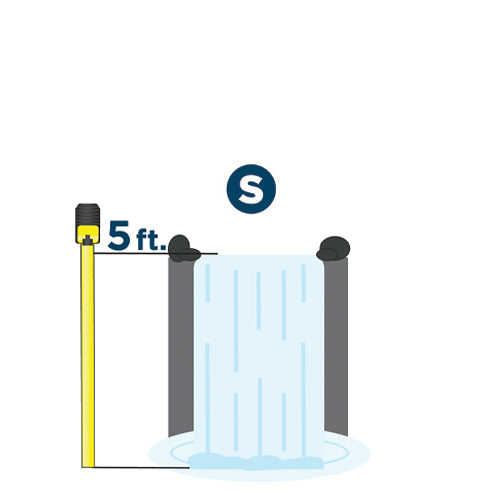
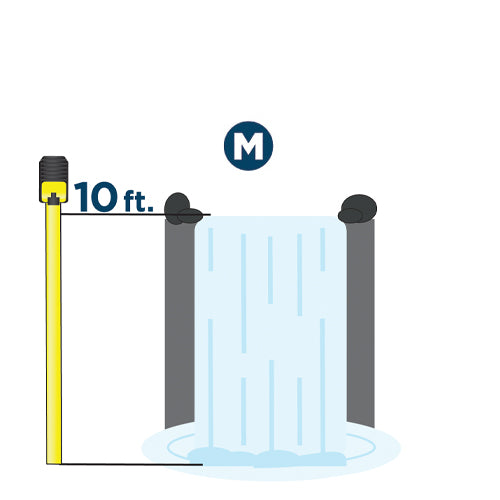
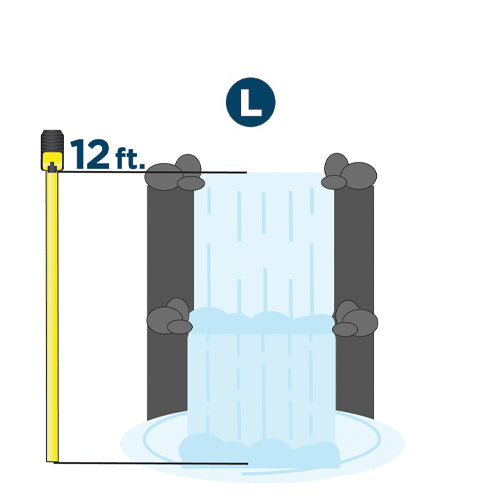
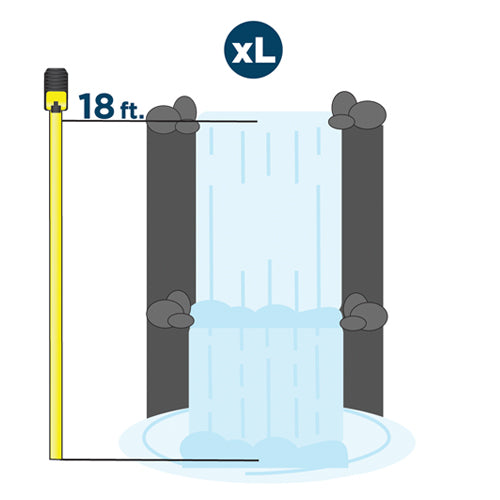
| Waterfall Size | Ideal Waterfall Height | Recommended Pump | Pump Dimensions |
| Small | 5 ft. | 1,200 GPH Waterfall Pump | 6.8 x 3.94 x 4.17 in. |
| Medium | 10 ft. | 2,000 GPH Waterfall Pump | 7.4 x 3.9 x 4.17 in. |
| Large | 12 ft. | 3,600 GPH Waterfall Pump | 10.5 x 4.9 x 6 in. |
| Extra-Large | 18 ft. | 5,100 GPH Waterfall Pump | 10.5 x 4.9 x 6 in. |
Tubing
Tubing is a conduit, allowing water to flow from a pump to the rest of your pond equipment.
Tubing-to-Pump Compatibility Chart
| 1,200 GPH Waterfall Pump | 2,000 GPH Waterfall Pump | 3,600 GPH Waterfall Pump | 5,100 GPH Waterfall Pump | |
Use with |
1 in. Corrugated Tubing |
1 in. and 1.5 in. Corrugated Tubing |
1.5 in. and 2 in. Corrugated Tubing |
|
TIP! For a gentler flow, choose the largest tubing size recommended for the waterfall pump. For a faster flow, use the smaller size recommended for the waterfall pump.